Showing posts with label 1983 NL Season. Show all posts

Sep 16, 2022

MVP Profile: Dale Murphy, 1983

Outfielder, Atlanta Braves


Age:  27

7th season with Braves

Bats – Right, Throws – Right

Height: 6’4”    Weight: 210 

Prior to 1983:

A native of Portland, Oregon, Murphy was a catcher in high school who batted .465 as a senior. Tall, fast, and with impressive power potential, he was chosen by the Braves fifth overall in the 1974 amateur draft, passing up on Arizona State to turn pro. Initially assigned to Kingsport of the Rookie-level Appalachian League, he hit .254 in 54 games with 5 home runs and 31 RBIs. Moving on to Greenwood of the Class A Western Carolinas League in 1975, Murphy batted .228 with 5 home runs and 48 RBIs. He converted to Mormonism after the season which fit his puritanical values. With Savannah of the Class AA Southern League in 1976 he hit .267 with 12 home runs and 55 RBIs before moving on to Richmond of the Class AAA International League, where he batted .260 in 18 games, prior to receiving a late-season call-up to the Braves. He started 17 games at catcher and hit .262. Back with Richmond in 1977, Murphy’s batting improved to .305 with 22 home runs and 90 RBIs. His defense went bad as his strong throwing arm proved to be erratic from behind the plate. He received a trial at first base before receiving another September call-up to the Braves where he was utilized as a catcher. He stuck with the Braves in 1978 as a first baseman, where his throwing problems persisted. Murphy hit .226 with 23 home runs and 79 RBIs while leading the NL in batter strikeouts with 145. He was hindered by a knee injury that required surgery in 1979 but, appearing in 104 games and helped by a hot start at the plate, his batting average improved to .276 along with 21 home runs and 57 RBIs. He started the season at catcher and was back at first base following his return to the lineup. Murphy had a new position in 1980, thanks to the acquisition of veteran first baseman Chris Chambliss. Shifted to center field, he adapted well and was an All-Star for the first time on his way to batting .281 with 33 home runs and 89 RBIs. Murphy’s production dropped off during the strike-interrupted 1981 season to .247 with 13 home runs and 50 RBIs. The soft-spoken, clean-living, and even-tempered center fielder was very much a player on the rise by 1982, although his disappointing 1981 performance led to a pay cut with many incentives added to his contract. The Braves won the NL West in 1982 and Murphy had his first MVP season as he led the league with 109 RBIs while batting .281 with 36 home runs, a .378 on-base percentage, and a .507 slugging percentage. He also received his first Gold Glove for his play in center field.


1983 Season Summary

Appeared in 162 games

CF – 136, LF – 28, RF – 2, PH – 2

[Bracketed numbers indicate NL rank in Top 20]

Batting

Plate Appearances – 687 [5]

At Bats – 589 [13]

Runs – 131 [2]

Hits – 178 [6]

Doubles – 24

Triples – 4

Home Runs – 36 [2]

RBI – 121 [1]

Bases on Balls – 90 [4]

Int. BB – 12 [11, tied with six others]

Strikeouts – 110 [8, tied with Pedro Guerrero]

Stolen Bases – 30 [18, tied with Jose Cruz, Omar Moreno & Ken Landreaux]

Caught Stealing – 4

Average - .302 [6, tied with Keith Moreland]

OBP - .393 [3, tied with Tim Raines]

Slugging Pct. - .540 [1]

Total Bases – 318 [2]

GDP – 15 [13, tied with Steve Yeager]

Hit by Pitches – 2

Sac Hits – 0

Sac Flies – 6 [16, tied with ten others]


League-leading RBIs were +8 ahead of runner-up Andre Dawson

League-leading slugging percentage was +.001 ahead of runner-up Andre Dawson


Midseason snapshot: HR – 19, RBI – 58, AVG – .324, SLG - .592, OBP – .415

---

Most hits, game – 4 (in 5 AB) vs. San Francisco 6/11, (in 6 AB) at Chi. Cubs 8/21, (in 4 AB) vs. San Diego 9/16

Longest hitting streak – 11 games

HR at home – 17

HR on road – 19

Most home runs, game – 2 on six occasions

Multi-HR games – 6

Most RBIs, game – 5 vs. San Francisco 8/11

Pinch-hitting – 0 for 2 (.000)

Fielding

Chances – 389

Put Outs – 373

Assists – 10

Errors – 6

DP – 0

Pct. - .985


Awards & Honors:

NL MVP: BBWAA

Gold Glove

Silver Slugger

All-Star (started for NL in RF)


Top 5 in NL MVP Voting:

Dale Murphy, Atl.: 318 points - 21 of 24 first place votes, 95% share

Andre Dawson, Mon.: 213 points – 1 first place vote, 63% share

Mike Schmidt, Phila.: 191 points – 1 first place vote, 57% share

Pedro Guerrero, LAD: 182 points – 1 first place vote, 54% share

Tim Raines, Mon.: 83 points – 25% share

---

Braves went 88-74 to finish second in the NL Western Division, 3 games behind the division-winning Los Angeles Dodgers while leading the league in runs scored (746), RBIs (691), batting (.272), and OBP (.341). The fast-starting Braves got off to a 14-5 start in April which included a seven-game winning streak. 49-31 at the All-Star break, they were in first place by 6.5 games over the Dodgers by August 13, two days before slugging third baseman Bob Horner went down with a broken wrist. With Murphy doing his best to maintain good production in Horner’s absence, Atlanta still fell off the pace and behind the Dodgers, finishing in a solid second place.


Aftermath of ‘83:

“The Murph” was solid again in 1984, hitting .290 with 100 RBIs and tying for the league lead in home runs with 36 while again pacing the circuit in slugging percentage (.547). He placed ninth in league MVP voting. While the Braves were sinking in the standings, Murphy continued his strong production in 1985, leading the NL in runs scored (118), home runs (37), and walks drawn (90), as well as batter strikeouts (141), while batting .300 with 111 RBIs and a .388 on-base percentage. He remained a Gold Glove performer in center field and finished seventh in MVP voting. In 1986, he hit .265 with 29 home runs and 83 RBIs. He slumped badly in July as Atlanta toppled out of contention and sat out a game, closing out a 740-consecutive games streak. Murphy had one last big year in 1987, batting .295 with 44 home runs and 105 RBIs. He was shifted to right field and remained an All-Star who finished eleventh in league MVP balloting. With a 106-loss, last-place club in 1988, his production dropped off to .226 with 24 home runs and 77 RBIs. Murphy’s situation was no better in 1989 as he batted .228 with 20 home runs and 84 RBIs. He lasted 97 more games with the Braves in 1990 and was hitting .232 with 17 home runs and 55 RBIs when he was dealt to the Philadelphia Phillies in August as part of a five-player trade. The Phillies signed him to a two-year contract following his arrival and he improved to .266 with 7 home runs and 28 RBIs in the last 57 games of the season. His 1991 production was .252 with 18 home runs and 81 RBIs. Limited to 18 games by injury in 1992, Murphy failed to make the team in 1993. He finished his career with the expansion Colorado Rockies, where he played in 26 games and hit .143 before calling it quits. For his major league career, Murphy batted .265 with 2111 hits that included 350 doubles, 39 triples, and 398 home runs. He scored 1197 runs and compiled 1266 RBIs and a .346 OBP. With the Braves he posted a .268 average with 1901 hits, 1103 runs scored, 306 doubles, 37 triples, 371 home runs, 1143 RBI, and a .351 OBP. The 1982 NLCS marked his only postseason appearance. A seven-time All-Star and five-time Gold Glove winner as well as a two-time MVP, the Braves retired his #3. An outspoken critic of steroid users after his playing days, Murphy created an organization called I Don’t Cheat that warns young athletes against using performance-enhancing drugs. He has also been involved in charity work.


---


MVP Profiles feature players in the National or American leagues who were winners of the Chalmers Award (1911-14), League Award (1922-29), or Baseball Writers’ Association of America Award (1931 to present) as Most Valuable Player. 

Apr 18, 2019

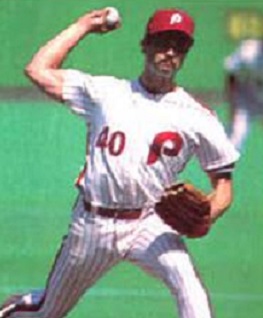
Cy Young Profile: John Denny, 1983

Pitcher, Philadelphia Phillies


Age:  30
2nd season with Phillies (1st complete)
Bats – Right, Throws – Right
Height: 6’3”    Weight: 185

Prior to 1983:
A native of Prescott, Arizona, Denny starred in baseball and football in high school, after which he was selected by the St. Louis Cardinals in the 1970 amateur draft. Initially assigned to the Rookie-level Gulf Coast League, he appeared in 11 games in ’70 and went 2-2 with a 1.29 ERA and 43 strikeouts over 42 innings pitched. Advancing to St. Petersburg of the Class A Florida State League in 1971, Denny produced an 8-13 record with a 3.04 ERA and 77 strikeouts over the course of 139 innings. He spent 1972 with Modesto of the Class A California League where he started 14 games and had a 7-5 tally with a 4.40 ERA. Moving on to the Arkansas Travelers of the Class AA Texas League in 1973 he started 20 games and compiled a 10-6 record with a 3.12 ERA and 81 strikeouts. Advancing to the Tulsa Oilers of the Class AAA American Association in 1974, Denny went 9-8 with a 3.75 ERA and 79 strikeouts, earning a September call-up to the Cardinals in which he appeared in two games and generated no decisions. Starting the 1975 season with the Cards, he was sent back to Tulsa, where he went 3-1 before returning to St. Louis. Prone to ankle injuries while in the minors, Denny pitched well after being recalled by the Cardinals until he was hindered by a leg injury. He ended up with a 10-7 record and 3.97 ERA with 72 strikeouts for the Cards. With command of a fastball, hard curve, and change-up, Denny was a bright spot on a fifth-place club in 1976, leading the NL with a 2.52 ERA, although lack of run support limited his record to 11-9. He dropped to 8-8 with a 4.51 ERA during an injury-riddled 1977. Denny bounced back with a 14-11 tally and 2.96 ERA in 1978. In addition to his pitching talent he also became known for his temper that could be directed against umpires and teammates, as well as opponents. His 1979 performance dropped to 8-11 with a 4.85 ERA and he was traded to Cleveland in the offseason. He suffered a heel injury midway through the 1980 season that sidelined him for the rest of the way and left him with an 8-6 record and 4.39 ERA. Denny performed well during the strike-interrupted 1981 season, going 10-6 with a 3.15 ERA. Bothered by a sore shoulder in 1982, he had a 6-11 record with a 5.01 ERA when he was traded to the Phillies in September, where he was 0-2 the rest of the way.    

1983 Season Summary
Appeared in 36 games

[Bracketed numbers indicate NL rank in Top 20]

Pitching
Games – 36
Games Started – 36 [3, tied with Steve Rogers]
Complete Games – 7 [11, tied with Rick Rhoden, Pascual Perez & Jerry Reuss]
Wins – 19 [1]
Losses – 6
PCT - .760 [1]
Saves – 0
Shutouts – 1
Innings Pitched – 242.2 [7]
Hits – 229 [8]
Runs – 77
Earned Runs – 64
Home Runs – 9
Bases on Balls – 53
Strikeouts – 139 [14]
ERA – 2.37 [2]
Hit Batters – 4 [12, tied with twelve others]
Balks – 1
Wild Pitches – 6 [20, tied with seven others]

League-leading wins were +2 ahead of runners-up Mario Soto, Steve Rogers & Bill Gullickson
League-leading win percentage was +.108 ahead of runners-up Larry McWilliams, Pascual Perez & John Candelaria

Midseason Snapshot: 6-4, ERA - 2.13, SO - 52 in 109.2 IP

---

Most strikeouts, game – 10 (in 7 IP) vs. Pittsburgh 8/9
10+ strikeout games – 1
Fewest hits allowed, game (min. 7 IP) – 2 (in 9 IP) vs. Houston 4/30, (in 9 IP) vs. NY Mets 7/1

Batting
PA – 96, AB – 77, R – 7, H – 13, 2B – 1, 3B – 0, HR – 0, RBI – 2, BB – 2, SO – 16, SB – 2, CS – 0, AVG - .169, GDP – 2, HBP – 0, SH – 17, SF – 0

Fielding
Chances – 66
Put Outs – 16
Assists – 42
Errors – 8
DP – 6
Pct. - .879

Postseason Pitching:
G – 3 (NLCS vs. LA Dodgers – 1 G; World Series vs. Baltimore – 2 G)
GS – 3, CG – 0, Record – 1-2, PCT – .333, SV – 0, ShO – 0, IP – 19, H – 17, R – 8, ER – 5, HR – 1, BB – 6, SO – 12, ERA – 2.37, HB – 1, BLK – 0, WP – 0,

Awards & Honors:
NL Cy Young Award: BBWAA
NL Pitcher of the Year: Sporting News
13th in NL MVP voting (24 points, 7% share)

NL Cy Young voting (Top 5):
John Denny, Phila.: 103 pts. – 20 of 24 first place votes, 86% share
Mario Soto, Cin.: 61 pts. – 2 first place votes, 51% share
Jesse Orosco, NYM: 19 pts. – 1 first place vote, 16% share
Steve Rogers, Mon.: 15 pts. – 1 first place vote, 13% share
Larry McWilliams, Pitt.: 7 pts. – 6% share

Phillies went 90-72 to finish first in the NL Eastern Division by 6 games over the Pittsburgh Pirates. The pitching staff led the league in strikeouts (1092). The Phillies were at 43-42 in July when GM Paul Owens fired manager Pat Corrales and took over as field manager. They went 47-30 the rest of the way to secure the NL East title. Won NLCS over the Los Angeles Dodgers, 3 games to 1. Lost World Series to the Baltimore Orioles, 4 games to 1, with Denny’s Game 1 victory Philadelphia’s only win.

Aftermath of ‘83:
An elbow injury sidelined Denny for more than two months during the 1984 season and he finished at 7-7 with a 2.45 ERA. He came back in 1985 with an 11-14 record and 3.82 ERA and 123 strikeouts over 230.2 innings pitched. Dealt to the Cincinnati Reds in the offseason, he produced an 11-10 record with a 4.20 ERA and 115 strikeouts before retiring at age 33. Overall for his career, he compiled a 123-108 record with a 3.59 ERA and 1146 strikeouts over 2148.2 innings pitched. With the Phillies he was 37-29 with a 2.96 ERA and 375 strikeouts over 650 innings pitched. His only postseason action came with the Phillies in 1983.

--


Cy Young Profiles feature pitchers who were recipients of the Cy Young Award by the Baseball Writers’ Association of America (1956 to present). The award was presented to a single major league winner from its inception through 1966 and from 1967 on to one recipient from each major league.  

Apr 9, 2019

Rookie of the Year: Darryl Strawberry, 1983

Outfielder, New York Mets


Age:  21
Bats – Left, Throws – Left
Height: 6’6”    Weight: 190

Prior to 1983:
A native of the Crenshaw neighborhood of Los Angeles, Strawberry was drawn to sports as a potential ticket out of difficult circumstances. With great natural baseball talent, the tall and rangy Strawberry excelled with a strong Crenshaw High School team both as a pitcher and outfielder. Following high school, he was chosen first overall by the Mets in the 1980 amateur draft. Receiving a $200,000 signing bonus he was first assigned to Kingsport of the Rookie-level Appalachian League where he appeared in 44 games and batted .268 with 5 home runs and 20 RBIs. Advancing to Lynchburg of the Class A Carolina League in 1981 Strawberry struggled at the plate and hit .255 with 13 home runs and 78 RBIs. Moving up to Jackson of the Class AA Texas League in 1982, he began to flash the form that had been expected of him, batting .283 with a league-leading 34 home runs, 97 RBIs, and 45 stolen bases. As a result he was named to the league All-Star team. Strawberry played winter ball in Venezuela and began the 1983 season with the Tidewater Tides of the Class AAA International League and was hitting .333 when he was called up to the struggling Mets in May.

1983 Season Summary
Appeared in 122 games
RF – 117, PH – 4, PR – 3

[Bracketed numbers indicate NL rank in Top 20]

Batting
Plate Appearances – 473
At Bats – 420
Runs – 63
Hits – 108
Doubles – 15
Triples – 7 [13, tied with six others]
Home Runs – 26 [7]
RBI – 74 [20]
Bases on Balls – 47
Int. BB – 9
Strikeouts – 128 [2, tied with Jason Thompson]
Stolen Bases – 19
Caught Stealing – 6
Average - .257
OBP - .336
Slugging Pct. - .512 [Non-qualifying]
Total Bases – 215
GDP – 5
Hit by Pitches – 4 [11, tied with ten others]
Sac Hits – 0
Sac Flies – 2

Midseason snapshot: HR – 8, RBI – 28, AVG – .202, SLG PCT – .399

---

Most hits, game – 3 on five occasions
Longest hitting streak – 11 games
Most HR, game – 2 (in 5 AB) at St. Louis 6/28, (in 5 AB) at Atlanta 7/19, (in 4 AB) at San Diego 8/22, (in 4 AB) vs. San Francisco 8/27
HR at home – 10
HR on road – 16
Multi-HR games – 4
Most RBIs, game – 5 at St. Louis 6/28
Pinch-hitting/running – 0 of 4 (.000) with 2 R, 1 SB

Fielding
Chances – 244
Put Outs – 232
Assists – 8
Errors – 4
DP - 0
Pct. - .984

Awards & Honors:
NL Rookie of the Year: BBWAA

NL ROY Voting (Top 5):
Darryl Strawberry, NYM: 106 pts. – 18 of 24 first place votes, 88% share
Craig McMurtry, Atl.: 49 pts. – 6 first place votes, 41% share
Mel Hall, ChiC..: 32 pts. – 27% share
Gary Redus, Cin.: 8 pts. – 7% share
Bill Doran, Hou.: 7 pts. – 6% share

---

Mets went 68-94 to finish sixth in the NL Eastern Division, 22 games behind the division-winning Philadelphia Phillies while leading the league in fewest runs scored (575) among other offensive categories. Manager George Bamberger quit in early June while the club was at 16-30 and was replaced on an interim basis by Frank Howard, which briefly lifted the Mets until they slid to a second straight last-place finish (and seventh consecutive losing record).

Aftermath of ‘83:
The Mets rose to second place in the NL East in 1984 and Strawberry contributed 26 home runs, once again, along with 97 RBIs, 27 stolen bases, and a .251 batting average. He was chosen as an All-Star for the first time but also took criticism for a dreadful August slump and for occasionally lackadaisical play in the outfield. The Mets again finished a close second in the division in 1985 and Strawberry was limited to 111 games due to a thumb injury but still hit .277 with 29 home runs and 79 RBIs. In 1986 the Mets won the NL East and the league pennant and proceeded to defeat the Red Sox in the World Series. In his third straight All-Star season, Strawberry batted .259 with 27 home runs and 93 RBIs. The team fell back to second place in 1987 while Strawberry hit .284 with 39 home runs and 104 RBIs, placing sixth in NL MVP voting. With the Mets returning to the top of the NL East in 1988 Strawberry topped the league with 39 home runs and a .545 slugging percentage while further producing 101 RBIs and a .269 batting average. This time he finished second in league MVP balloting. New York fell back to second place in 1989 and Strawberry suffered through a difficult year, hitting just .225 with 29 home runs and 77 RBIs and dealing with numerous off-field troubles, including conflicts with some of his teammates. Affected by some turmoil in 1990, the Mets were again a second place club, although Strawberry returned to form with 37 home runs, 108 RBIs, and a .277 batting average. In the offseason he signed a five-year, $20.25 million contract with the Los Angeles Dodgers. He had a fine first season with LA in 1991, batting .265 with 28 home runs and 99 RBIs. A back injury that required surgery limited him to 43 games in 1992. An injury-marred 1993 season saw Strawberry hit just .140 in 32 games. Confirming rumors of years of drug and alcohol abuse he was sent to the Betty Ford Clinic for treatment. Released by the Dodgers, he caught on with the San Francisco Giants during the 1994 season and hit four home runs with 17 RBIs before the players’ strike wiped out the remainder of the schedule. Facing tax evasion as well as renewed drug charges, Strawberry returned to New York with the Yankees in 1995, although he started the season in the minors. He joined the Yankees for 32 games late in the year, hitting .276 with 3 home runs and 13 RBIs. Strawberry appeared in 63 games in 1996 for the Yanks, splitting most of his time between left field and DH. He hit .262 with 11 home runs and 36 RBIs and was a key contributor in the postseason, where he accounted for 3 home runs and 5 RBIs in the ALCS victory over Baltimore. Following an injury-marred 1997 season in which he appeared in only 11 games for the Yankees, Strawberry returned in 1998 to play in 101 games, batting .247 with 24 home runs and 57 RBIs. The Yanks won the World Series but without Strawberry, who was diagnosed with colon cancer and began treatment. Cancer treatment and a drug suspension limited Strawberry to 24 games and three home runs in 1999, although he connected with a key three-run home run in the ALDS vs. Texas. He retired after the season having batted .259 with 1401 hits for his major league career that included 256 doubles, 38 triples, and 335 home runs. Of that, he batted .263 with 1025 hits for the Mets, which included 187 doubles, 30 triples, and 252 home runs. Overall, he further compiled 1000 RBIs and 221 stolen bases, with 733 RBIs and 191 stolen bases accumulated with the Mets. Strawberry was an eight-time All-Star (seven with the Mets) and received two Silver Slugger awards. In 40 postseason games he hit .254 with 9 home runs and 22 RBIs. A player who came to the major leagues with huge potential and hype, Strawberry achieved a fair amount of success, but was also hindered by off-field issues.

--


Rookie of the Year Profiles feature players who were recipients of the Rookie of the Year Award by the Baseball Writers’ Association of America (1947 to present). The award was presented to a single major league winner from its inception through 1948 and from 1949 on to one recipient from each major league.