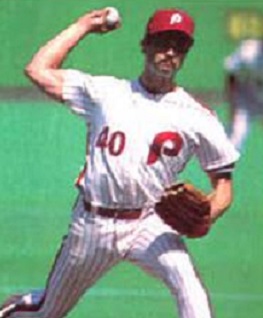
May 7, 2019

MVP Profile: Alex Rodriguez, 2003

Shortstop, Texas Rangers


Age:  28 (July 27)
3rd season with Rangers
Bats – Right, Throws – Right
Height: 6’3”    Weight: 230

Prior to 2003:
Rodriguez was born in New York City to Dominican parents who returned to Santo Domingo when he was four. The family returned to the US a few years later, this time in Miami where Rodriguez played youth league baseball. At Westminster Christian High School, he excelled in football and basketball, as well as baseball. The Seattle Mariners made him the first overall pick in the 1993 amateur draft and he signed for a $1.3 million bonus. The 18-year-old Rodriguez was first assigned to Appleton of the Class A Midwest League in 1994 where he batted .319 in 65 games and was promoted to the Jacksonville Suns of the Class AA Southern League. He played in 17 games at Class AA and was promoted to the Mariners in July. Overmatched in his first exposure to the big leagues, Rodriguez was sent to the Calgary Cannons of the Class AAA Pacific Coast League where he hit .311 in 32 games with 6 home runs and 21 RBIs. Following a winter of play in the Dominican Republic, Rodriguez was assigned to Tacoma of the PCL in 1995. He moved back-and-forth between Tacoma and the Mariners during the season and by August he was back with Seattle full-time. In Class AAA he batted .360 in 54 games with 15 home runs and 45 RBIs and in 48 appearances with the Mariners he hit .232 with 5 home runs and 19 RBIs. Rodriguez became the starting shortstop in 1996 and led the AL in runs scored (141), doubles (54), batting (.358), and total bases (379) in addition to compiling 36 home runs and 123 RBIs. The player known as “A-Rod” also was an All-Star for the first time, was awarded a Silver Slugger, finished second in league MVP voting by a narrow margin, and was named MLB Player of the Year by The Sporting News. Rodriguez started strong in 1997 but, bothered by a chest injury, overall his numbers dropped to a .300 average with 23 home runs and 84 RBIs. In the field he led all AL shortstops by committing 24 errors. He started at shortstop for the AL in the All-Star Game. In 1998 “A-Rod” batted .310 with a league-leading 213 hits as well as 42 home runs, 124 RBIs, and 46 stolen bases. He also topped all AL shortstops with 731 total chances and ranked second with 268 put outs and 445 assists. In 1999, Rodriguez suffered a knee injury that required surgery early in the season and ended up hitting .285 in 129 games with 42 home runs and 111 RBIs. With center fielder Ken Griffey, Jr. gone in 2000, “A-Rod” became the key player in Seattle’s lineup and batted .316 with 41 home runs and 132 RBIs. He finished third in AL MVP balloting. A free agent in the offseason, Rodriguez signed a 10-year, $252 million contract with the Rangers. He had an outstanding season with a losing team in 2001, hitting .318 with a league-leading 133 runs scored and 52 home runs, plus 135 RBIs. He also led all AL shortstops with 279 put outs and finished sixth in league MVP voting. “A-Rod” placed second for AL MVP in 2002 after batting .300 with 57 home runs and 142 RBIs. He also received a Gold Glove for outstanding play in the field.

2003 Season Summary
Appeared in 161 games
SS – 158, DH – 1, PH – 2

[Bracketed numbers indicate AL rank in Top 20]

Batting
Plate Appearances – 715 [5]
At Bats – 607 [18]
Runs – 124 [1]
Hits – 181 [12, tied with Carlos Lee]
Doubles – 30
Triples – 6 [13, tied with six others]
Home Runs – 47 [1]
RBI – 118 [2]
Bases on Balls – 87 [8]
Int. BB – 10 [8, tied with Eric Chavez & Garret Anderson]
Strikeouts – 126 [7]
Stolen Bases – 17 [17, tied with five others]
Caught Stealing – 3
Average - .298 [20]
OBP - .396 [7, tied with Trot Nixon]
Slugging Pct. - .600 [1]
Total Bases – 364 [2]
GDP – 16 [16, tied with Dmitri Young & Hank Blalock]
Hit by Pitches – 15 [6, tied with A.J. Pierzynski, David Eckstein & Carl Everett]
Sac Hits – 0
Sac Flies – 6

League-leading runs scored were +4 ahead of runner-up Nomar Garciaparra
League-leading home runs were +5 ahead of runners-up Carlos Delgado & Frank Thomas
League-leading slugging percentage was +.007 ahead of runner-up Carlos Delgado

Midseason snapshot: HR – 22, RBI – 60, AVG - .285, SLG PCT - .544

---


Most hits, game – 5 (in 5 AB) vs. NY Yankees 4/27
Longest hitting streak – 13 games
HR at home – 26
HR on road – 21
Most home runs, game – 2 (in 4 AB) vs. Anaheim 4/16, (in 4 AB) at Kansas City 8/28 – 11 innings, (in 5 AB) vs. Anaheim 9/20
Multi-HR games – 3
Most RBIs, game – 6 vs. NY Yankees 4/27
Pinch-hitting – 0 of 2 (.000)

Fielding
Chances – 699
Put Outs – 227
Assists – 464
Errors – 8
DP – 111
Pct. - .989

Awards & Honors:
AL MVP: BBWAA
Gold Glove
Silver Slugger
AL Hank Aaron Award: MLB
All-Star (started for AL at SS)

Top 5 in AL MVP Voting:
Alex Rodriguez, Tex.: 242 pts. – 6 of 28 first place votes, 62% share
Carlos Delgado, Tor.: 213 pts. – 5 first place votes, 54% share
Jorge Posada, NYY: 194 pts. – 5 first place votes, 49% share
Shannon Stewart, Tor./Min.: 140 pts. – 3 first place votes, 36% share
David Ortiz, Bos.: 130 pts. – 4 first place votes, 33% share
(1 first place vote apiece for Manny Ramirez, Bos., who ranked sixth, Nomar Garciaparra, Bos. who ranked seventh, Vernon Wells, Tor., who ranked eighth, Miguel Tejada, Oak., who ranked eleventh & Jason Giambi,NYY, who ranked 13th)

---

Rangers went 71-91 to finish fourth (last) in the AL Western Division, 25 games behind the division-winning Oakland Athletics, while leading the league in home runs (239).

Aftermath of ‘03:
In the offseason, “A-Rod” was traded to the New York Yankees for power-hitting second baseman Alfonso Soriano. Shifted to third base due to the presence of Derek Jeter, Rodriguez adjusted well in the field and at the plate batted .286 with 36 home runs and 106 RBIs. New York won the AL East and “A-Rod” hit well in the ALDS triumph over the Twins. The Yanks lost the ALCS to the Boston Red Sox despite breaking out to a 3 games-to-0 lead and Rodriguez was part of the collapse, managing only two hits in his last 17 at bats. He had a second MVP season in 2005, batting .321 with 130 RBIs and a league-leading 48 home runs and .610 slugging percentage. The Yanks narrowly topped the AL East but lost to the Angels in the ALDS as Rodriguez again took criticism for hitting just .133 in the five games.  He had another strong performance in 2006, hitting .290 with 35 home runs and 121 RBIs. He and the Yankees again came up short in the postseason. “A-Rod” got off to a fast start with the slow-starting Yanks in 2007 and rode that to his third MVP season, batting .314 and topping the AL in runs scored (143), home runs (54), RBIs (156), slugging (.645), and total bases (376). Following the season, he chose to exercise an opt-out clause in his contract but then re-signed with the Yankees for $270 million over 10 years. Rodriguez encountered injury problems in 2008, as well as off-field controversy. He ended up producing solidly (35 home runs, 103 RBIs, .302 average) while leading the AL in slugging (.573). Surgery for a hip condition limited Rodriguez to 124 games in 2009, with his production limited to 30 home runs, 100 RBIs, and a .286 batting average. He played well in the postseason as the Yankees reached the World Series and defeated the Phillies. In 2010 “A-Rod” reached the 600-home run milestone during a season in which he batted .270 with 30 home runs and 125 RBIs. A knee injury that required arthroscopic surgery limited him to 99 games in 2011 as well as 16 home runs and 62 RBIs. Following another injury-plagued season in 2012, Rodriguez underwent further hip surgery in 2013. After a minor league rehabilitation assignment, he joined the Yankees in August facing a suspension by major league baseball for his use of performance-enhancing drugs and his related involvement with the Biogenesis scandal. He ended up appearing in just 44 major league games with 7 home runs and 19 RBIs. He was suspended for the entire 2014 season. Reinstated in 2015, Rodriguez played in 151 games, primarily as a Designated Hitter, and hit .250 with 33 home runs and 86 RBIs. He played one last season in 2015. Overall for his career, “A-Rod” batted .295 with 3115 hits that included 548 doubles, 31 triples, and 696 home runs. He also struck out 2287 times and compiled 2086 RBIs and 329 stolen bases. Often criticized for a lack of postseason production, he appeared in 76 postseason games and hit .259 with 13 home runs and 41 RBIs. In addition to being a three-time AL MVP, Rodriguez was a 14-time All-Star (three with Texas) and won two Gold Gloves and 10 Silver Slugger Awards.  

--


MVP Profiles feature players in the National or American leagues who were winners of the Chalmers Award (1911-14), League Award (1922-29), or Baseball Writers’ Association of America Award (1931 to present) as Most Valuable Player.

May 3, 2019

MVP Profile: Carl Hubbell, 1933

Pitcher, New York Giants


Age:  30 (June 22)
6th season with Giants
Bats – Right, Throws – Left
Height: 6’0”    Weight: 170

Prior to 1933:
Born in Missouri, Hubbell grew up in Meeker, Oklahoma, where he pitched well in high school with a fastball and curve. Following graduation, he joined Cushing of the Oklahoma State League in 1923. By 1925 Hubbell was with Oklahoma City of the Class A Western League where, having added a screwball to his repertoire, he produced a 17-13 record with a 4.01 ERA. The Detroit Tigers purchased his contract after the season, but during 1926 spring training he was forbidden from using the screwball due to the increased prospect of suffering an arm injury. Sent to Toronto of the Class AA International League, Hubbell was a disappointing 7-7 with a 3.77 ERA while disallowed from throwing the screwball. Demoted to Decatur of the Illinois-Indiana-Iowa (or Three-I) League in 1927, Hubbell was a respectable 14-7 with a 2.53 ERA, but the Tigers sold his contract to the Beaumont Exporters of the Class A Texas League in 1928 where he was able to again utilize the screwball. Compiling a 12-9 record with a 2.97 ERA by midseason his contract was purchased by the Giants for $30,000. Hubbell ended up going 10-6 for the Giants with a 2.83 ERA and 37 strikeouts in 124 innings pitched.  He followed up with an 18-11 record in 1929 with a 3.69 ERA and 106 strikeouts over 268 innings. Along the way he pitched a no-hitter against Pittsburgh.  The lanky southpaw was 17-12 for the third place Giants in 1930, with a 3.87 ERA (which ranked second in the NL in a year dominated by hitting in which the league mien ERA was 4.97) and 117 strikeouts. His 1931 record was 14-12 with a 2.65 ERA and 155 strikeouts. 1932 was a year of transition for the Giants as the talented but irascible long-time manager John McGraw was replaced by Bill Terry during the season. Hubbell contributed an 18-11 record for the sixth-place club with a 2.50 ERA and 137 strikeouts.    

1933 Season Summary
Appeared in 45 games

[Bracketed numbers indicate NL rank in Top 20]

Pitching
Games – 45 [3, tied with Ad Liska]
Games Started – 33 [6, tied with Tex Carleton, Paul Derringer & Hal Schumacher]
Complete Games – 22 [4]
Wins – 23 [1]
Losses – 12 [19, tied with Guy Bush, Hal Schumacher & Steve Swetonic]
PCT - .657 [3]
Saves – 5 [2, tied with Dizzy Dean, Hi Bell & Bill Harris]
Shutouts – 10 [1]
Innings Pitched – 308.2 [1]
Hits – 256 [8, tied with Ed Brandt]
Runs – 69
Earned Runs – 57
Home Runs – 6
Bases on Balls – 47
Strikeouts – 156 [2]
ERA – 1.66 [1]
Hit Batters – 3
Balks – 0
Wild Pitches – 3

League-leading wins were +3 ahead of runners-up Dizzy Dean, Guy Bush & Ben Cantwell]
League-leading shutouts were +3 ahead of runner-up Hal Schumacher
League-leading innings pitched were +15.2 ahead of runner-up Dizzy Dean
League-leading ERA was -0.34 lower than runner-up Lon Warneke

Midseason Snapshot: 11-5, ERA - 1.84, SO - 87 in 156.1 IP

---

Most strikeouts, game – 13 (in 9 IP) vs. Boston Braves 4/20
10+ strikeout games – 3
Fewest hits allowed, game (min. 7 IP) – 4 (in 9 IP) vs. Bos. Braves 4/20, (in 9 IP) vs. Brooklyn 4/24, (in 9 IP) vs. Brooklyn 7/27, (in 10 IP) at Bos. Braves 9/1

Batting
PA – 116, AB – 109, R – 6, H – 20, 2B – 2, 3B – 1, HR – 1, RBI – 12, BB – 2, SO – 18, SB – 0, CS – N/A, AVG - .183, GDP – 2, HBP – 0, SH – 5, SF – N/A

Fielding
Chances - 119
Put Outs – 23
Assists – 94
Errors – 2
DP – 5
Pct. - .983

Postseason Pitching: G – 2 (World Series vs. Washington)
GS – 2, CG – 2, Record – 2-0 PCT – 1.000, SV – 0, ShO – 0, IP – 20, H – 13, R – 3, ER – 0, HR – 0, BB – 6, SO – 15, ERA – 0.00, HB – 0, BLK – 0, WP – 0

Awards & Honors:
NL MVP: BBWAA
All-Star

Top 5 in NL MVP Voting:
Carl Hubbell, NYG: 77 pts. – 96% share
Chuck Klein, PhilaP.: 48 pts. – 60% share
Wally Berger, BosB.: 44 pts. – 55% share
Bill Terry, NYG: 35 pts. – 44% share
Pepper Martin, StLC.: 31 pts. – 39% share

---

Giants went 91-61 to win the NL pennant by 5 games over the Pittsburgh Pirates. The pitching staff led the league in ERA (2.71), shutouts (23), fewest hits allowed (1280), batting (.286), and fewest runs allowed 514). Won World Series over the Washington Senators, 4 games to 1. Hubbell’s two wins included an 11-inning 2-1 contest in Game 4.

Aftermath of ‘33:
The Giants were strong contenders again in 1934 and Hubbell compiled a 21-12 record with a league-leading 2.30 ERA and 25 complete games. During the All-Star Game at the Polo Grounds, he struck out five consecutive future Hall of Fame batters (Babe Ruth and Lou Gehrig of the Yankees, Jimmie Foxx of the A’s, Al Simmons of the White Sox & Joe Cronin of the Senators). Hubbell, who came to be referred to as “King Carl” and “the Meal Ticket” due to his consistency and reliability, was outstanding again in 1935 as he went 23-12 with a 3.27 ERA and 150 strikeouts while pitching 302.2 innings. The Giants returned to the top of the NL in 1936 and Hubbell was the league MVP for the second time thanks to a 26-6 record, including wins in his last 16 decisions of the season, and league-best 2.31 ERA. The Giants made it two straight pennants in 1937 as Hubbell’s regular season winning streak reached 24 games as he prevailed in his first 8 decisions on his way to a 22-8 tally and 3.20 ERA while topping the NL with 159 strikeouts. In 1938, elbow pain due to throwing the screwball prematurely ended Hubbell’s season with a 13-10 record and 3.07 ERA as he needed surgery to remove bone chips. He remained with the Giants until 1943 and continued to be an effective, if no longer dominant, pitcher. He won 11 games each year from 1939 to ’42, and his 11-12 record in 1940 was the only sub-.500 performance of his career. His 2.75 ERA in 1939 was his best during the same four-year time period. His career came to an end after the 1943 season, by which point his left hand was deformed from years of throwing the screwball. Upon his retirement following 16 seasons with the Giants, Hubbell had a 253-154 record with five 20-win records, a 2.98 ERA, 36 shutouts, and 1677 strikeouts over 3590.1 innings pitched. In the postseason, he produced a 4-2 record with four complete games and 32 strikeouts over 50.1 innings. In addition to being a two-time MVP, he was a nine-time All-Star. Hubbell was elected to the Baseball Hall of Fame in 1947 and the Giants retired his #11. Upon the end of his playing career, the Giants made Hubbell the team’s director of player development, a position he held for 35 years, well after the franchise’s move to San Francisco. He remained a scout for the club until his death in 1988 at the age of 85.

--

MVP Profiles feature players in the National or American leagues who were winners of the Chalmers Award (1911-14), League Award (1922-29), or Baseball Writers’ Association of America Award (1931 to present) as Most Valuable Player.

Apr 30, 2019

Rookie of the Year: Butch Metzger, 1976

Pitcher, San Diego Padres


Age:  24 (May 23)
Bats – Right, Throws – Right
Height: 6’1”    Weight: 185

Prior to 1976:
Born in Lafayette, Indiana, Clarence Edward Metzger, who acquired the nickname “Butch” in his youth, grew up in Sacramento, California. Excelling in American Legion baseball and at John F. Kennedy High School, where he also played football, Metzger, whose best pitch was a rising fastball, was drafted by the San Francisco Giants in 1970 and signed for a $27,000 bonus. Initially assigned to Great Falls of the Rookie-level Pioneer League, he started 13 games and produced a 2-9 record with a 4.17 ERA and 92 strikeouts over 82 innings pitched. Starting the 1971 season with the Decatur Commodores of the Class A Midwest League, he encountered difficulty, going 3-7 with a 6.49 ERA and 48 walks and 65 strikeouts over 68 innings before being demoted back to the Pioneer League, this time with the Magic Valley Cowboys where he was 6-5 with a 3.91 ERA and 108 strikeouts over 106 innings pitched. His control improved in 1972, which he split between Decatur and Amarillo of the Class AA Texas League. His combined record was 6-7 with a 3.15 ERA and 152 strikeouts over 140 innings. Returning to Amarillo in 1973, Metzger was 10-3 with a 2.75 ERA and 117 strikeouts before being promoted to Phoenix of the Class AAA Pacific Coast League, where he again encountered difficulties and was 2-5 with a 4.63 ERA. Back with Phoenix in 1974 after failing to catch on with the Giants in the spring, he compiled a 12-10 tally with a 4.72 ERA and 148 strikeouts while pitching 204 innings. He received a September call-up to San Francisco and was 1-0 in ten relief outings with a 3.55 ERA. In the offseason Metzger was dealt to the Padres along with veteran second baseman Tito Fuentes for second baseman Derrel Thomas. Assigned to the Hawaii Islanders of the Pacific Coast League in 1975, Metzger was utilized primarily as a reliever and was 15-7 with a 3.62 ERA, 5 saves, and 114 strikeouts over 169 innings. Receiving a late call-up to the Padres, he made four relief appearances and was 1-0 with a 7.71 ERA. Metzger pitched extremely well during the 1976 Cactus League season and earned a spot in the San Diego bullpen.   

1976 Season Summary
Appeared in 77 games

[Bracketed numbers indicate NL rank in Top 20]

Pitching
Games – 77 [2, tied with Charlie Hough]
Games Started – 0
Complete Games – 0
Wins – 11
Losses – 4
PCT - .733 [Non-qualifying]
Saves – 16 [5]
Shutouts – 0
Innings Pitched – 123.1
Hits – 119
Runs – 44
Earned Runs – 40
Home Runs – 5
Bases on Balls – 52
Strikeouts – 89
ERA – 2.92 [Non-qualifying]
Hit Batters – 3
Balks – 1
Wild Pitches – 0

Midseason Snapshot: 5-0, ERA - 2.09, G – 38, SV – 8, SO - 46 in 64.2 IP

---

Most strikeouts, game – 4 (in 2 IP) at Philadelphia 7/10, (in 2 IP) at Montreal 8/14

Batting
PA – 12, AB – 8, R – 1, H – 0, 2B – 0, 3B – 0, HR – 0, RBI – 0, BB – 2, SO – 2, SB – 0, CS – 0, AVG - .000, GDP – 0, HBP – 0, SH – 2, SF – 0

Fielding
Chances – 23
Put Outs – 5
Assists – 17
Errors – 1
DP – 0
Pct. - .957

Awards & Honors:
NL Rookie of the Year: BBWAA (co-winner)
3rd in NL Cy Young voting (62 points, 1 first place vote, 30% share)

NL ROY Voting:
Butch Metzger, SD: 11 of 24 votes, 46% share
Pat Zachry, Cin.: 11 votes, 46% share
Hector Cruz, StL.: 2 votes, 8% share

---

Padres went 73-89 to finish fifth in the NL Western Division, 29 games behind the division-winning Cincinnati Reds. The Padres started the season well and were surprisingly in second place, just five games behind the Reds, on June 22. With a lack of hitting they slumped in the season’s second half.

Aftermath of ‘76:
The signing of ace closer Rollie Fingers in the offseason by the Padres caused Metzger to become trade bait. Following a rough spring in 1977, Metzger appeared in 17 games, one of them his only major league start, and had no decisions and a 5.56 ERA when he was traded to the St. Louis Cardinals for RHP John D’Acquisto and infielder Pat Scanlon in May. In 58 relief appearances for St. Louis the rest of the way, he was 4-2 with a 3.11 ERA and 7 saves. The Cardinals release Metzger prior to the 1978 season and he was picked up by the New York Mets. Unimpressive in 25 appearances with the Mets, Metzger was sold to the Philadelphia Phillies in July, who assigned him to the Oklahoma City 89ers of the Class AAA American Association where he was utilized as a starter and struggled to a 3-7 record with a 4.50 ERA. After failing to make the Phillies in 1979, Metzger pitched for Caracas of the Inter-American League and had two wins in as many appearances. He spent his final professional season with Richmond of the Class AAA International League where he returned to the bullpen and went 3-6 with a 3.26 ERA. Overall in his brief major league career, Metzger appeared in 191 games and was 18-9 with a 3.74 ERA, 23 saves, and 175 strikeouts over 293.1 innings pitched. He went 12-4 with a 3.46 ERA, 16 saves, and 101 strikeouts for the Padres. Following his baseball career, he returned to Sacramento and became a firefighter and, later, a scout for the Texas Rangers.

--


Rookie of the Year Profiles feature players who were recipients of the Rookie of the Year Award by the Baseball Writers’ Association of America (1947 to present). The award was presented to a single major league winner from its inception through 1948 and from 1949 on to one recipient from each major league. 

Apr 26, 2019

Rookie of the Year: Vince Coleman, 1985

Outfielder, St. Louis Cardinals


Age:  24 (Sept. 22)
Bats – Both, Throws – Right
Height: 6’0”    Weight: 170

Prior to 1985:
A native of Jacksonville, Florida, Coleman played baseball at that city’s Raines High School before going to college at Florida A & M. There, he was a punter and placekicker on the football team, following in the footsteps of his cousin Greg Coleman, who became a punter with the NFL’s Minnesota Vikings. As a baseball player, he was sidelined during his sophomore year by a broken wrist, but as a junior in 1981 he hit .383 and stole 65 bases in 66 games. He batted .407 with 42 stolen bases in 28 games as a senior. Due to his great speed, pro football’s Washington Redskins invited him to minicamp in 1982 to audition as a wide receiver. Coleman, who had first been drafted by the Phillies in 1981, was chosen by the Cardinals in the ’82 amateur draft and signed. First assigned to Johnson City of the Rookie-level Appalachian League, Coleman appeared in 58 games and co-led the league (along with future Twins great Kirby Puckett) in stolen bases with 43 while hitting .250. Making the conversion from a right-handed batter into a switch-hitter, he advanced to Macon of the Class A South Atlantic League in 1983 where he was the batting champion with a .350 average, despite missing time with a broken right hand, and also stole 145 bases to set a professional baseball record. Coleman moved on to the Louisville Redbirds of the Class AAA American Association in 1984 where he batted .257 and stole 101 bases. Coleman had difficulty at the plate during spring training in 1985 and started the season with Louisville. When reserve outfielder Tito Landrum suffered an injury in April, Coleman was called up and soon took over the starting job in left field.  

1985 Season Summary
Appeared in 151 games
LF – 138, CF – 17, RF – 10, PH – 1

[Bracketed numbers indicate NL rank in Top 20]

Batting
Plate Appearances – 692 [6]
At Bats – 636 [3]
Runs – 107 [5]
Hits – 170 [12]
Doubles – 20
Triples – 10 [4, tied with Phil Garner]
Home Runs – 1
RBI – 40
Bases on Balls – 50
Int. BB – 1
Strikeouts – 115 [6]
Stolen Bases – 110 [1]
Caught Stealing – 25 [1]
Average - .267
OBP - .320
Slugging Pct. - .335
Total Bases – 213
GDP – 3
Hit by Pitches – 0
Sac Hits – 5
Sac Flies – 1

League-leading stolen bases were +40 ahead of runner-up Tim Raines
League-leading times caught stealing were +6 ahead of runner-up Juan Samuel

Midseason snapshot: HR – 1, R – 64, SB – 63, RBI – 16, AVG - .278, OBP - .340

---

Most hits, game – 4 (in 5 AB) vs. Pittsburgh 4/19, (in 4 AB) vs. Houston 6/4, in 5 AB) at San Diego 7/25, (in 7 AB) at Chi. Cubs 8/1 – 14 innings
Longest hitting streak – 11 games
Most HR, game – 1 (in 4 AB) vs. Atlanta 5/21
HR at home – 1
HR on road – 0
Multi-HR games – 0
Most RBIs, game – 2 on eight occasions
Pinch-hitting – 0 of 1 (.000)

Fielding
Chances – 328
Put Outs – 305
Assists – 16
Errors – 7
DP - 1
Pct. - .979

Postseason Batting: 3 G (NLCS vs. LA Dodgers)
PA – 14, AB – 14, R – 2, H – 4, 2B – 0,3B – 0, HR – 0, RBI – 1, BB – 0, IBB – 0, SO – 2, SB – 1, CS – 1, AVG - .286, OBP - .286, SLG -.286, TB – 4, GDP – 1, HBP – 0, SH – 0, SF – 0
Missed World Series due to injury

Awards & Honors:
NL Rookie of the Year: BBWAA
11th in NL MVP voting (16 points, 5% share)

NL ROY Voting (Top 5):
Vince Coleman, StL.: 120 pts. – 24 of 24 first place votes, 100% share
Tom Browning, Cin.: 72 pts. – 60% share
Mariano Duncan, LAD: 9 pts. – 8% share
Chris Brown, SF: 7 pts. – 6% share
Glenn Davis, Hou.: 3 pts. – 3% share

---

Cardinals went 101-61 to finish first in the NL Eastern Division by 3 games over the New York Mets while leading the league in runs scored (747), triples (59),  RBIs (687), stolen bases (314), walks drawn (586), batting (.264), and on-base percentage (.335). The Cardinals battled the Mets into September when a 14-1 stretch put them in a position to maintain control of the NL East. Won NLCS over the Los Angeles Dodgers, 4 games to 2. Lost World Series to the Kansas City Royals, 4 games to 3, after leading by 3 games to 1. Coleman missed the Series after the automatic tarpaulin at Busch Memorial Stadium injured his knee while warming up for Game 1.

Aftermath of ‘85:
Coleman slumped at the plate in 1986 and batted .232, although he still accumulated a league-leading 107 stolen bases. He also continued to be a solid defensive left fielder. He made it three straight hundred-steal seasons in 1987 with 109 to go with a .289 batting average and 10 triples. Coleman was an All-Star for the first time in 1988, in a season in which his stolen base total dropped to 81, which was still enough to top the National League. He legged out another 10 triples on his way to a .260 average, while striking out 111 times, far too often for a leadoff hitter. Coleman led the NL in stolen bases twice more in 1989 and ’90, with totals of 65 and 77 respectively. His batting averages were .254 in 1989 and .292 in ’90. Following six years in St. Louis, the player nicknamed “Vincent Van Go” signed as a free agent with the New York Mets in 1991 for four years and $11.95 million. He lasted for three difficult seasons in New York in which his batting averages were .255, .275, and .279, and his stolen base totals 37, 24, and 38. Injuries and suspensions for bad behavior cut deeply into his playing time. In 1994 Coleman was traded to the Kansas City Royals where he batted .240 during the strike-shortened season and stole 50 bases. Returning to the Royals in 1995, he was traded to Seattle in August and, for the year, hit a combined .288 with 42 stolen bases. Coleman had unimpressive stints with Cincinnati in 1996 and Detroit in ’97 and failed to make a comeback with the Cardinals in 1998, leading to his retirement. Overall, Coleman batted .264 with 1425 hits that included 176 doubles, 89 triples, and 28 home runs. Most notably he compiled 752 stolen bases, leading the NL six times. His RBI total was 346. With the Cardinals he stole 549 bases, batted .265, and accumulated 937 hits, 106 doubles, 56 triples, 15 home runs, and 217 RBIs. Coleman was a two-time All-Star (both with the Cards). In 28 postseason games he hit .198 and stole 13 bases. Coleman was inducted into the St. Louis Cardinals Hall of Fame in 2018.

--


Rookie of the Year Profiles feature players who were recipients of the Rookie of the Year Award by the Baseball Writers’ Association of America (1947 to present). The award was presented to a single major league winner from its inception through 1948 and from 1949 on to one recipient from each major league. 

Apr 23, 2019

MVP Profile: Dick Groat, 1960

Shortstop, Pittsburgh Pirates


Age:  29
7th season with Pirates
Bats – Right, Throws – Right
Height: 5’11” Weight: 180

Prior to 1960:
A Pennsylvania native who lettered in basketball and volleyball as well as baseball at Swissvale High School, Groat went to Duke University on a basketball scholarship. He was a two-time All-American in basketball as well as baseball. He set a then-NCAA basketball record by scoring 831 points in a season as a junior and was a first-round draft pick by the NBA’s Fort Wayne Pistons in 1952, but signed with the Pirates the same year, once his college baseball season was concluded. Receiving a bonus contract he bypassed the minor leagues and went to the Pirates immediately, and started at shortstop. In 95 games with Pittsburgh in ’52 he batted .284 and tied for third in NL Rookie of the Year balloting. In the offseason, Groat played basketball with the Pistons. Drafted into the Army, he missed the 1953 and ’54 baseball seasons (he never returned to the NBA). Coming back to the Pirates in 1955, Groat regained his starting job at shortstop and hit .267 after a slow start at the plate. He also teamed up well with second baseman Bill Mazeroski in the field. A contact hitter with little power, he batted .273 with only 22 extra base hits in 1956. A vocal team leader and steady fielder, Groat helped fuel Pittsburgh’s rise to respectability after many years of mostly losing seasons. He hit .315 in 1957 with 30 doubles, 5 triples, 7 home runs, and 54 RBIs. Groat followed up in 1958 with 36 doubles, 9 triples, 3 home runs, 66 RBIs, and a .300 average. He was an All-Star for the first time in 1959 in a season in which he batted .275 with 22 doubles, 7 triples, 5 home runs, and 51 RBIs. In the field he led all NL shortstops with 803 chances, 301 put outs, and 97 double plays, as well as 29 errors.

1960 Season Summary
Appeared in 138 games
SS – 136, PH – 1, PR – 1

[Bracketed numbers indicate NL rank in Top 20]

Batting
Plate Appearances – 629 [12]
At Bats – 573 [7]
Runs – 85 [13]
Hits – 186 [3]
Doubles – 26 [10, tied with Ken Boyer, Pancho Herrera & Norm Larker]
Triples – 4
Home Runs – 2
RBI – 50
Bases on Balls – 39
Int. BB – 0
Strikeouts – 35
Stolen Bases – 0
Caught Stealing – 2
Average - .325 [1]
OBP - .371 [6]
Slugging Pct. - .394
Total Bases – 226 [18]
GDP – 7
Hit by Pitches – 4 [9, tied with eleven others]
Sac Hits – 12 [3]
Sac Flies – 1

League-leading batting average was +.002 ahead of runner-up Norm Larker

Midseason snapshot: 2B – 19, HR- 0, RBI- 29, AVG - .315, OBP - .359

---

Most hits, game – 6 (in 6 AB) at Milwaukee 5/13
Longest hitting streak – 11 games
HR at home – 1
HR on road – 1
Most home runs, game – 1 (in 4 AB) vs. St. Louis 8/12, (in 5 AB) at LA Dodgers 8/30
Multi-HR games – 0
Most RBIs, game – 2 on eleven occasions
Pinch-hitting – 0 of 1 (.000)

Fielding
Chances – 704
Put Outs – 237
Assists – 443
Errors – 24
DP – 92
Pct. - .966

Postseason Batting: 7 G (World Series vs. NY Yankees)
PA – 28, AB – 28, R – 3, H – 6, 2B – 2,3B – 0, HR – 0, RBI – 2, BB – 0, IBB – 0, SO – 1, SB – 0, CS – 0, AVG - .214, OBP - .214, SLG - .286, TB – 8, GDP – 1, HBP – 0, SH – 0, SF – 0

Awards & Honors:
NL MVP: BBWAA
All-Star
MLB Lou Gehrig Memorial Award

Top 5 in NL MVP Voting:
Dick Groat, Pitt.: 276 pts. - 16 of 22 first place votes, 82% share
Don Hoak, Pitt.: 162 pts. – 5 first place votes, 48% share
Willie Mays, SF: 115 pts. – 34% share
Ernie Banks, ChiC.: 100 pts. – 30% share
Lindy McDaniel, StL.: 95 pts. – 28% share
(1 first place vote for Roberto Clemente, Pitt., who ranked eighth)

---

Pirates went 95-59 to win NL pennant by 7 games over the Milwaukee Braves for their first pennant since 1927. They led the NL in runs scored (734), hits (1493), doubles (236), RBIs (689), batting (.276), OBP (.335), and total bases (2201). Won World Series over the New York Yankees, 4 games to 3, capped by Bill Mazeroski’s Game 7 walk-off home run.

Aftermath of ‘60:
The Pirates dropped to sixth place in 1961 and Groat batted .275 with 25 doubles, 6 triples, 6 home runs, and 55 RBIs. An intelligent player without great range who was a master at positioning himself in the field, he also led NL shortstops with 117 double plays and was near the top in chances (740) and assists (473). Groat’s batting average rose to .294 in 1962, along with 34 doubles, 3 triples, 2 home runs, and 61 RBIs, although in the field he topped all NL shortstops with 38 errors, as well as 873 chances, 314 put outs, 521 assists, and 126 double plays. Trade bait after the season, he was dealt to the St. Louis Cardinals. In 1963, all four starting infielders for the Cardinals (including Groat), started for the NL in the All-Star Game (1B Bill White, 2B Julian Javier, and 3B Ken Boyer were the others). Groat’s leadership qualities were considered to be a factor in the Cards’ contending for most of the season and he ended up placing second in NL MVP voting after leading the circuit with 43 doubles, to go along with 201 hits, 11 triples, 6 home runs, 73 RBIs, and a .319 batting average. In the field he placed second among NL shortstops with 731 chances and 448 assists. The Cardinals came from behind to win the NL pennant in 1964, and then beat the Yankees in the World Series. Groat contributed a .292 batting average and 35 doubles, along with 6 triples, a home run, and 70 RBIs along with steady play in the field. The team slumped in 1965, and so did Groat, whose batting average dropped to .254 with 26 doubles, 5 triples, and 52 RBIs. The Cards cleaned house in the offseason and Groat was traded to the Philadelphia Phillies along with first baseman Bill White, and backup catcher Bob Uecker for RHP Art Mahaffey, catcher Pat Corrales, and outfielder Alex Johnson. He struggled at the plate during most of the 1966 season and finished with a .260 average. Groat was hindered by a sore ankle in 1967 and played sparingly for the Phillies before being dealt to San Francisco in June. He played in only 44 games overall and hit .156. He retired after the season. For his major league career, Groat batted .286 with 2138 hits that included 352 doubles, 67 triples, and 39 home runs. He also accumulated 707 RBIs. With the Pirates his average was .290 with 1435 hits, 225 doubles, 40 triples, 30 home runs, and 454 RBIs. He was a five-time All-Star. He has been inducted into the College Baseball and College Basketball Halls of Fame.

--


MVP Profiles feature players in the National or American leagues who were winners of the Chalmers Award (1911-14), League Award (1922-29), or Baseball Writers’ Association of America Award (1931 to present) as Most Valuable Player.

Apr 18, 2019

Cy Young Profile: John Denny, 1983

Pitcher, Philadelphia Phillies


Age:  30
2nd season with Phillies (1st complete)
Bats – Right, Throws – Right
Height: 6’3”    Weight: 185

Prior to 1983:
A native of Prescott, Arizona, Denny starred in baseball and football in high school, after which he was selected by the St. Louis Cardinals in the 1970 amateur draft. Initially assigned to the Rookie-level Gulf Coast League, he appeared in 11 games in ’70 and went 2-2 with a 1.29 ERA and 43 strikeouts over 42 innings pitched. Advancing to St. Petersburg of the Class A Florida State League in 1971, Denny produced an 8-13 record with a 3.04 ERA and 77 strikeouts over the course of 139 innings. He spent 1972 with Modesto of the Class A California League where he started 14 games and had a 7-5 tally with a 4.40 ERA. Moving on to the Arkansas Travelers of the Class AA Texas League in 1973 he started 20 games and compiled a 10-6 record with a 3.12 ERA and 81 strikeouts. Advancing to the Tulsa Oilers of the Class AAA American Association in 1974, Denny went 9-8 with a 3.75 ERA and 79 strikeouts, earning a September call-up to the Cardinals in which he appeared in two games and generated no decisions. Starting the 1975 season with the Cards, he was sent back to Tulsa, where he went 3-1 before returning to St. Louis. Prone to ankle injuries while in the minors, Denny pitched well after being recalled by the Cardinals until he was hindered by a leg injury. He ended up with a 10-7 record and 3.97 ERA with 72 strikeouts for the Cards. With command of a fastball, hard curve, and change-up, Denny was a bright spot on a fifth-place club in 1976, leading the NL with a 2.52 ERA, although lack of run support limited his record to 11-9. He dropped to 8-8 with a 4.51 ERA during an injury-riddled 1977. Denny bounced back with a 14-11 tally and 2.96 ERA in 1978. In addition to his pitching talent he also became known for his temper that could be directed against umpires and teammates, as well as opponents. His 1979 performance dropped to 8-11 with a 4.85 ERA and he was traded to Cleveland in the offseason. He suffered a heel injury midway through the 1980 season that sidelined him for the rest of the way and left him with an 8-6 record and 4.39 ERA. Denny performed well during the strike-interrupted 1981 season, going 10-6 with a 3.15 ERA. Bothered by a sore shoulder in 1982, he had a 6-11 record with a 5.01 ERA when he was traded to the Phillies in September, where he was 0-2 the rest of the way.    

1983 Season Summary
Appeared in 36 games

[Bracketed numbers indicate NL rank in Top 20]

Pitching
Games – 36
Games Started – 36 [3, tied with Steve Rogers]
Complete Games – 7 [11, tied with Rick Rhoden, Pascual Perez & Jerry Reuss]
Wins – 19 [1]
Losses – 6
PCT - .760 [1]
Saves – 0
Shutouts – 1
Innings Pitched – 242.2 [7]
Hits – 229 [8]
Runs – 77
Earned Runs – 64
Home Runs – 9
Bases on Balls – 53
Strikeouts – 139 [14]
ERA – 2.37 [2]
Hit Batters – 4 [12, tied with twelve others]
Balks – 1
Wild Pitches – 6 [20, tied with seven others]

League-leading wins were +2 ahead of runners-up Mario Soto, Steve Rogers & Bill Gullickson
League-leading win percentage was +.108 ahead of runners-up Larry McWilliams, Pascual Perez & John Candelaria

Midseason Snapshot: 6-4, ERA - 2.13, SO - 52 in 109.2 IP

---

Most strikeouts, game – 10 (in 7 IP) vs. Pittsburgh 8/9
10+ strikeout games – 1
Fewest hits allowed, game (min. 7 IP) – 2 (in 9 IP) vs. Houston 4/30, (in 9 IP) vs. NY Mets 7/1

Batting
PA – 96, AB – 77, R – 7, H – 13, 2B – 1, 3B – 0, HR – 0, RBI – 2, BB – 2, SO – 16, SB – 2, CS – 0, AVG - .169, GDP – 2, HBP – 0, SH – 17, SF – 0

Fielding
Chances – 66
Put Outs – 16
Assists – 42
Errors – 8
DP – 6
Pct. - .879

Postseason Pitching:
G – 3 (NLCS vs. LA Dodgers – 1 G; World Series vs. Baltimore – 2 G)
GS – 3, CG – 0, Record – 1-2, PCT – .333, SV – 0, ShO – 0, IP – 19, H – 17, R – 8, ER – 5, HR – 1, BB – 6, SO – 12, ERA – 2.37, HB – 1, BLK – 0, WP – 0,

Awards & Honors:
NL Cy Young Award: BBWAA
NL Pitcher of the Year: Sporting News
13th in NL MVP voting (24 points, 7% share)

NL Cy Young voting (Top 5):
John Denny, Phila.: 103 pts. – 20 of 24 first place votes, 86% share
Mario Soto, Cin.: 61 pts. – 2 first place votes, 51% share
Jesse Orosco, NYM: 19 pts. – 1 first place vote, 16% share
Steve Rogers, Mon.: 15 pts. – 1 first place vote, 13% share
Larry McWilliams, Pitt.: 7 pts. – 6% share

Phillies went 90-72 to finish first in the NL Eastern Division by 6 games over the Pittsburgh Pirates. The pitching staff led the league in strikeouts (1092). The Phillies were at 43-42 in July when GM Paul Owens fired manager Pat Corrales and took over as field manager. They went 47-30 the rest of the way to secure the NL East title. Won NLCS over the Los Angeles Dodgers, 3 games to 1. Lost World Series to the Baltimore Orioles, 4 games to 1, with Denny’s Game 1 victory Philadelphia’s only win.

Aftermath of ‘83:
An elbow injury sidelined Denny for more than two months during the 1984 season and he finished at 7-7 with a 2.45 ERA. He came back in 1985 with an 11-14 record and 3.82 ERA and 123 strikeouts over 230.2 innings pitched. Dealt to the Cincinnati Reds in the offseason, he produced an 11-10 record with a 4.20 ERA and 115 strikeouts before retiring at age 33. Overall for his career, he compiled a 123-108 record with a 3.59 ERA and 1146 strikeouts over 2148.2 innings pitched. With the Phillies he was 37-29 with a 2.96 ERA and 375 strikeouts over 650 innings pitched. His only postseason action came with the Phillies in 1983.

--


Cy Young Profiles feature pitchers who were recipients of the Cy Young Award by the Baseball Writers’ Association of America (1956 to present). The award was presented to a single major league winner from its inception through 1966 and from 1967 on to one recipient from each major league.  

Apr 16, 2019

Rookie of the Year: Jose Canseco, 1986

Outfielder, Oakland Athletics


Age:  22 (July 2)
Bats – Right, Throws – Right
Height: 6’4”    Weight: 240

Prior to 1986:
A native of Cuba, Canseco and his family resettled in Opa-Locka, Florida, near Miami. He played baseball at the junior-varsity level until he was a senior in high school, at which point he was chosen by the Athletics in the fifteenth round of the 1982 amateur draft. Playing for teams in two leagues at the Rookie and Class A levels in ’82 he batted a combined .242 with 2 home runs and 7 RBIs in 34 games. In 1983 he started the season with Medford of the short-season Class A Northwest League where he was an All-Star selection after hitting .269 with 11 home runs and 40 RBIs. Canseco moved on to Madison of the Class A Midwest League to finish out the year and hit a measly .159 with 3 home runs and 10 RBIs over the course of 34 games. Playing for Modesto of the Class A California League in 1984, he batted .276 with 15 home runs and 73 RBIs. In the offseason he had his first admitted use of steroids as part of a weight training regimen in which he added several pounds of muscle. What followed in 1985 was a big performance with the Huntsville Stars of the Class AA Southern League in which he belted 25 home runs in only 58 games, along with a .318 average and 80 RBIs. Moving up to Tacoma of the Class AAA Pacific Coast League he hit another 11 home runs along with 47 RBIs and a .348 average in 60 games. Receiving a September call-up to the A’s, Canseco appeared in 29 games and hit .302 with 5 home runs and 13 RBIs. He was inserted into left field for Oakland in 1986.

1986 Season Summary
Appeared in 157 games
LF – 124, RF – 46, DH – 1, PH – 1

[Bracketed numbers indicate AL rank in Top 20]

Batting
Plate Appearances – 682 [13]
At Bats – 600 [13]
Runs – 85
Hits – 144
Doubles – 29
Triples – 1
Home Runs – 33 [4, tied with Rob Deer]
RBI – 117 [2]
Bases on Balls – 65
Int. BB – 1
Strikeouts – 175 [3]
Stolen Bases – 15
Caught Stealing – 7
Average - .240
OBP - .318
Slugging Pct. - .457
Total Bases – 274 [13]
GDP – 12
Hit by Pitches – 8 [5, tied with Chet Lemon, Jesse Barfield & Phil Bradley]
Sac Hits – 0
Sac Flies – 9 [3, tied with Dick Schofield & Jim Rice]

Midseason snapshot: HR – 23, RBI – 78, AVG - .274, SLG PCT - .526

---

Most hits, game – 4 (in 5 AB) vs. NY Yankees 9/1
Longest hitting streak – 9 games
Most HR, game – 2 (in 5 AB) at California 4/21
HR at home – 14
HR on road – 19
Multi-HR games – 1
Most RBIs, game – 5 vs. California 4/13
Pinch-hitting – 1 of 1 (1.000) with 1 RBI

Fielding
Chances – 337
Put Outs – 319
Assists – 4
Errors – 14
DP - 1
Pct. - .958

Awards & Honors:
AL Rookie of the Year: BBWAA
All-Star
20th in AL MVP voting (3 points, 1% share)

AL ROY Voting:
Jose Canseco, Oak.: 110 pts. – 16 of 28 first place votes, 79% share
Wally Joyner, Cal.: 98 pts. – 12 first place votes, 70% share
Mark Eichhorn, Tor.: 23 pts. – 16% share
Cory Snyder, Clev.: 16 pts. – 11% share
Danny Tartabull, Sea.: 4 pts. – 3% share
Ruben Sierra, Tex.: 1 pt. – 1% share

---

A’s went 76-86 to finish tied for third in the AL Western Division along with the Kansas City Royals, 16 games behind the division-winning California Angels. The injury depleted A’s improved following the firing of manager Jackie Moore, who was replaced in the interim by Jeff Newman and then by Tony LaRussa, who would guide the team’s development into a winner over the next few seasons.

Aftermath of ‘86:
Canseco followed up with another strong season in 1987 as he hit .257 with 31 home runs and 113 RBIs. He was overshadowed by rookie first baseman Mark McGwire’s 49-home run performance. The two sluggers came to be known as “the Bash Brothers” and fueled the club’s 1988 drive to the top of the AL West and the league pennant as well. Canseco made good on his stated objective of becoming the first player to hit 40 home runs and steal 40 bases in a season. His totals were a league-leading 42 home runs and an even 40 stolen bases. He also topped the circuit with 124 RBIs and a .569 slugging percentage while hitting .307. Shifted to right field he also accounted for 11 assists. An All-Star for the second time, he received the AL MVP award for his performance. Heading into 1989, off-field issues began to tarnish his image in addition to his being sidelined by a stress fracture in his left wrist that required surgery. When he finally took to the field for the A’s, he played well, batting .269 in 65 games with 17 home runs and 57 RBIs. The team again won its division and the AL pennant, as well as the World Series, in which Canseco batted .357 with a home run. He had a solid season in 1990 in which he batted .274 with 37 home runs and 101 RBIs. Oakland won a third straight pennant and was swept by Cincinnati in the World Series, where Canseco’s hitting was negligible. He topped the AL with 44 home runs in 1991, in addition to batting .266 with 122 RBIs for the fourth place A’s. Having run afoul of the Oakland front office and manager Tony LaRussa, Canseco was traded to the Texas Rangers on August 31, 1992 for outfielder Ruben Sierra, RHP Jeff Russell, RHP Bobby Witt, and cash. For the year he ended up with 26 home runs, 87 RBIs, and a .244 batting average. In 1993 Canseco was embarrassed in the outfield by having a fly ball hit him on the head and bounce over the wall for a home run. More seriously, a few days later in a runaway loss to the Red Sox in Boston, he was used as a pitcher and injured his arm to the extent that he required surgery. Appearing in only 60 games, he batted .255 with 10 home runs and 46 RBIs. Coming back to the Rangers during the strike-shortened 1994 season, he was utilized as a Designated Hitter and batted .282 with 31 home runs and 90 RBIs. In the offseason Canseco was dealt to the Boston Red Sox where he DH’d and hit .306 with 24 home runs and 81 RBIs in 1995. He was again productive at bat in 1996 where he batted .289 with 28 home runs and 82 RBIs. Traded back to Oakland in 1997, Canseco appeared in 108 games and hit .235 with 23 home runs and 73 RBIs. He signed with the Toronto Blue Jays as a free agent in 1998 and had a big year with 46 home runs, 107 RBIs, and a .237 batting average. With the Tampa Bay Devil Rays in 1999 he was an All-Star for the last time in his career, hitting 34 home runs with 95 RBIs and a .279 average. Waived by Tampa Bay during the 2000 season, he bounced around among a few major and minor league clubs in 2001 and ’02 to finish out his career. Overall, Canseco batted .266 in the major leagues with 1877 hits that included 340 doubles, 14 triples, and 462 home runs. He also accumulated 1407 RBIs and 200 stolen bases. With Oakland he batted .264 with 1048 hits, including 186 doubles, 8 triples, and 254 home runs as well as 793 RBIs and 135 stolen bases. He was a six-time All-Star (5 with the A’s), won four Silver Slugger awards, and twice led the AL in home runs. In 30 postseason games he hit .184 with 7 home runs and 18 RBIs. His life post baseball continued to be filled with controversy, particularly after the publishing of his tell-all book Juiced: Wild Times, Rampant ‘Roids, Smash Hits & How Baseball Got Big, that discussed the alleged extent of steroid use in the major leagues during Canseco’s playing career and fueled the investigation of performance enhancing drugs in baseball. Canseco’s twin brother Ozzie also briefly played major league baseball.    

--


Rookie of the Year Profiles feature players who were recipients of the Rookie of the Year Award by the Baseball Writers’ Association of America (1947 to present). The award was presented to a single major league winner from its inception through 1948 and from 1949 on to one recipient from each major league.